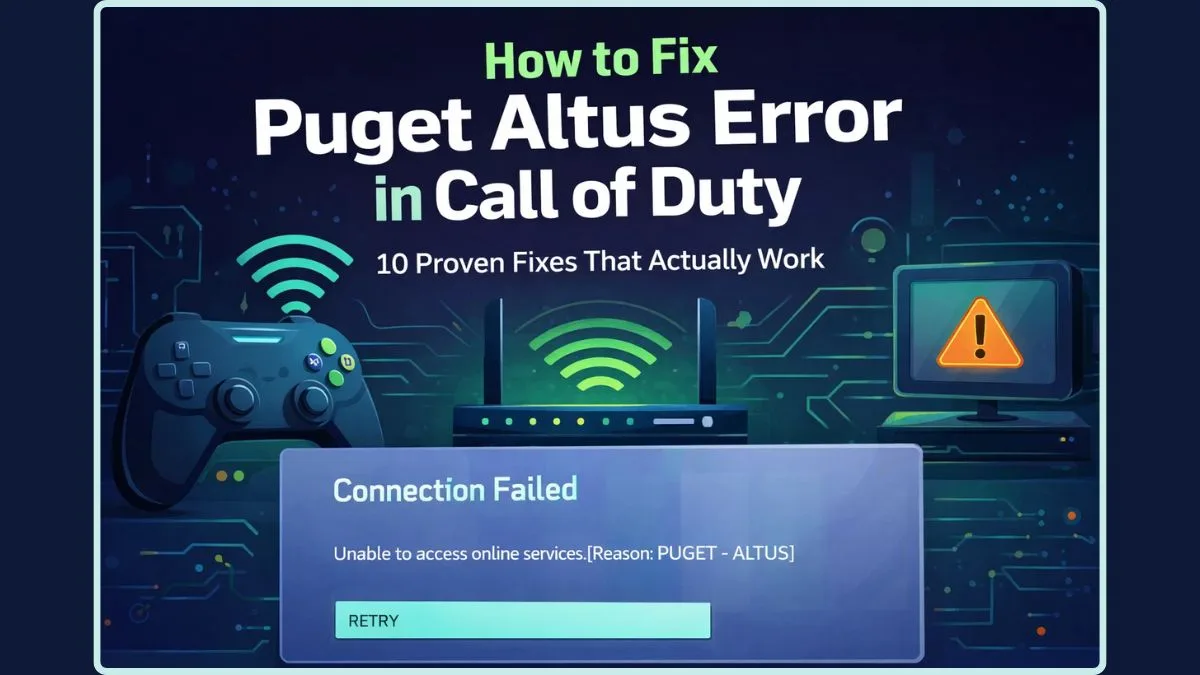
Decoding the Dreaded Puget-Altus Error: What It Means for Your CoD Experience
Few things are as frustrating for a Call of Duty enthusiast as being abruptly kicked out of an intense match or denied access to online services by an cryptic error code. If you've encountered the "Connection Failed Puget-Altus" message while trying to dive into the action in Call of Duty: Modern Warfare 2 or Warzone 2, you're certainly not alone. This particular bug has plagued players since the games' launch, and even many patches later, it occasionally rears its head, interrupting gameplay and challenging your patience.
The full error message typically reads: "Connection Failed - Unable to access online services [Reason: PUGET-ALTUS]". While the name itself offers little insight, the good news is that this error is almost always tied to connectivity issues – either on your end or on the game's servers – and the solutions are generally straightforward. You won't be sidelined for long once you know the right steps to take. Let's break down why this Puget-Altus Error occurs and, more importantly, how to get back into the fight.
What is the Puget-Altus Error?
At its core, the Puget-Altus Error is a generalized connection failure notification within the CoD ecosystem. It signifies that your game client couldn't establish or maintain a stable connection with the necessary online services provided by Activision. This isn't usually a sign of a corrupted game file or a serious hardware problem, but rather a temporary communication breakdown.
Why Does Puget-Altus Keep Kicking Me Out?
The reasons behind the Puget-Altus Error can vary, but they generally fall into two main categories:
- Your Internet Connection: This is the most common culprit. Fluctuating Wi-Fi signals, an overwhelmed router, or a temporary outage from your Internet Service Provider (ISP) can all trigger this error.
- Call of Duty Server Issues: Sometimes, the problem isn't on your end at all. Activision's servers, like any major online service, can experience downtime, maintenance, or unexpected load issues that prevent players from connecting.
- Outdated Game/System Software: Less frequently, an outdated game client, operating system, or even graphics drivers can cause communication glitches with online services.
Understanding these potential causes is the first step toward effective troubleshooting. Now, let's dive into the practical solutions.
Your First Line of Defense: Essential Troubleshooting Steps
When the Puget-Altus Error strikes, don't panic. Start with these fundamental checks, which resolve the vast majority of connection problems in MW2 and Warzone 2.
Step 1: Verify Call of Duty Server Status
Before you start fiddling with your router, it's crucial to confirm that the problem isn't a widespread issue affecting everyone. If Activision's servers are experiencing problems, no amount of troubleshooting on your end will help.
- Check Official Channels: The first place to look is the official Activision Online Services Status page. A quick search for "Activision Server Status" will lead you there. This page provides real-time updates on server health for all CoD titles.
- Consult Third-Party Monitors: Websites like DownDetector.com can offer additional insight by showing user reports of outages. If many players are reporting issues around the same time, it's a strong indicator of a server-side problem.
- Social Media: Check the official Call of Duty or Activision Support Twitter accounts. They often post updates about ongoing server issues and planned maintenance.
If servers are down or experiencing issues, your best course of action is simply to wait. Activision usually works quickly to resolve these problems.
Step 2: Fortify Your Internet Connection
Once you've confirmed that the CoD servers are operational, the next logical step is to examine your own internet connection. This is where most Puget-Altus Error fixes originate.
- Power Cycle Your Router and Modem: This is a classic IT fix for a reason. Unplug your router and modem from their power sources, wait for 30-60 seconds, then plug them back in. Allow them a few minutes to fully boot up and re-establish connection. This simple action clears temporary caches and often resolves minor network glitches.
- Check Your Signal Strength (Wi-Fi Users): If you're on Wi-Fi, ensure your gaming device is close enough to your router for a strong, stable signal. Obstacles like walls and other electronics can interfere.
- Consider an Ethernet Cable (Especially for PC): For PC players, and highly recommended for console players too, switching to a wired Ethernet connection is a game-changer. Wi-Fi is prone to interference, latency spikes, and signal drops that can easily trigger connection errors. An Ethernet cable provides a direct, stable, and faster connection, significantly reducing the chances of a Puget-Altus Error.
- Test Other Devices: Are other devices in your home able to access the internet normally? If not, the issue might be with your ISP, and a call to them might be necessary.
- Run a Speed Test: Use an online speed test to check your download and upload speeds. While CoD doesn't require ultra-fast internet, significantly slower-than-usual speeds could indicate a problem.
Step 3: A Simple Reboot Goes a Long Way
Just like your router, your gaming system (PC or console) benefits immensely from a good old-fashioned restart. This isn't just about turning the game off and on; it’s about refreshing the entire system.
- For PC: Perform a full system restart. Close MW2/Warzone 2, then go to Start > Power > Restart. This clears temporary files, resets network adapters, and resolves any minor software conflicts that might have arisen during your last session.
- For Consoles (PlayStation/Xbox): Fully power down your console, rather than just putting it into rest mode. Unplug it for a minute if possible to ensure a complete power cycle. This helps to clear the console's cache and can resolve various in-game glitches and connection issues.
Beyond the Basics: Advanced Fixes and Best Practices
If the standard troubleshooting steps haven't banished the Puget-Altus Error, it's time to dig a little deeper with these more advanced solutions.
Ensure All Your Software is Up-to-Date
Outdated software can lead to compatibility issues and connection problems. Keeping everything current is crucial for a smooth gaming experience.
- Game Updates: Always ensure your copy of MW2 or Warzone 2 is fully updated. Developers frequently release patches that address bugs, including connectivity issues. On PC, Steam and Battle.net clients usually auto-update, but you can manually check for updates. On consoles, your system will often prompt you for updates, or you can check in the game's menu or console settings.
- System Software/Operating System: Make sure your PC's Windows OS or your console's firmware is running the latest version. These updates often include network stack improvements and security fixes.
- Graphics Drivers (PC): For PC gamers, outdated GPU drivers can sometimes cause unforeseen conflicts, though less directly with connection errors. It's good practice to keep them updated via NVIDIA GeForce Experience, AMD Radeon Software, or your manufacturer's website.
Consider a Clean Game Reinstallation
This is a more drastic step and should be considered a last resort, but it's highly effective if the Puget-Altus Error persists after all other attempts. A clean reinstallation ensures you have fresh, uncorrupted game files.
- Uninstall the Game: Carefully uninstall Call of Duty: Modern Warfare 2 / Warzone 2 from your PC or console.
- Delete Residual Files (PC Only): After uninstalling, manually check your game directory and C:\Users\[YourUsername]\Documents for any leftover folders related to CoD and delete them. This ensures a truly clean slate.
- Reinstall the Game: Download and reinstall the game from scratch. Given the large file size, this will take some time, so plan accordingly.
Optimize Your Network for Gaming
For persistent issues, especially if you suspect your network setup is contributing to the Puget-Altus Error, consider these optimizations:
- Flush DNS (PC): Open Command Prompt as administrator and type
ipconfig /flushdns. This clears your DNS resolver cache, which can sometimes hold onto outdated or incorrect IP addresses. - Temporarily Disable VPN/Firewall: If you use a VPN or have a very strict firewall, try temporarily disabling them to see if they are interfering with CoD's connection. Remember to re-enable them afterward for security.
- Check for Router QoS Settings: Some routers have Quality of Service (QoS) settings that prioritize certain types of traffic. Ensure your gaming device or CoD traffic is given high priority.
When All Else Fails: Reaching Out for Support
If you've systematically worked through all these solutions and the Puget-Altus Error continues to plague your MW2 or Warzone 2 experience, it's time to contact Activision Support. Provide them with as much detail as possible about the error, what troubleshooting steps you've already taken, and any specific circumstances under which the error occurs. They may have advanced diagnostics or server-side checks that can identify the root cause.
The Puget-Altus Error in Call of Duty: Modern Warfare 2 and Warzone 2 can be a vexing obstacle, but it's rarely an insurmountable one. By methodically checking server status, optimizing your internet connection, ensuring your software is up-to-date, and knowing when to perform a clean reinstallation, you stand an excellent chance of resolving this issue and returning to the battlefield. Remember, patience and a systematic approach are your best allies against cryptic error codes. Happy gaming!